
 (317) 777-4101

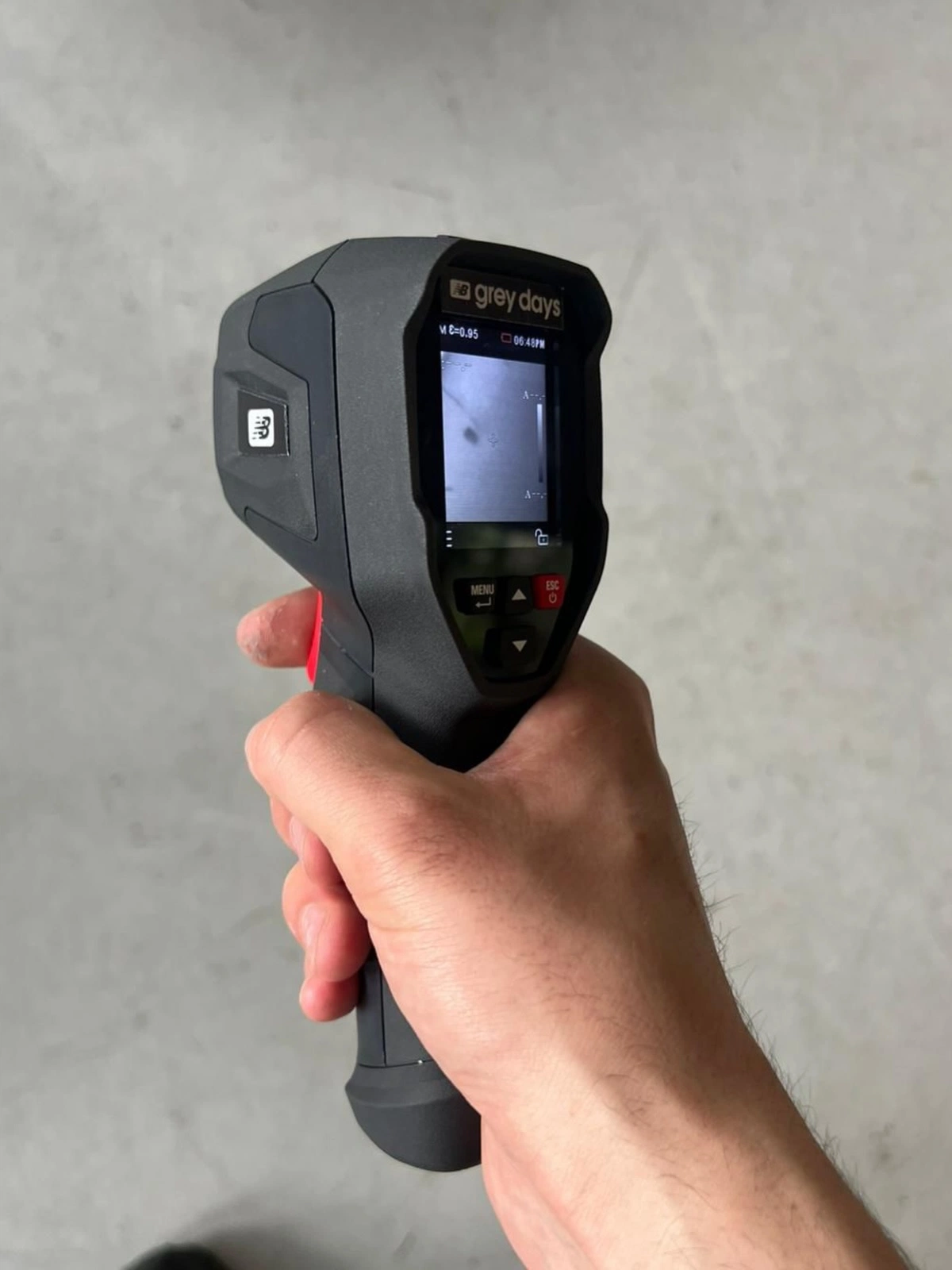
An electrical panel can look perfectly normal and still be running warmer at one connection than at everything around it. The cover is on, the breakers sit flush, nothing smells hot, and nothing trips. A thermal imaging camera gives an inspector a way to see that temperature difference while the system is still assembled and in service, which is why the tool has become a familiar part of electrical inspection kits. Thermal Imaging camera for electrical inspections: this is what you need to know.
Knowing what the camera is actually doing, and what it is not doing, matters whether you are hiring an inspector or considering equipment for your own work. The images look dramatic on a screen, and it is easy to read more into them than the technology supports.
What a Thermal Imaging Camera For Electrical Inspections Actually Measures
Modern thermal imaging cameras use microbolometer sensors to detect subtle variances in thermal radiation across the infrared spectrum. The sensor array reads those variances and turns them into a picture, so warmer surfaces and cooler surfaces end up visually distinct from one another.
The key point is that the camera is not measuring voltage, current, or resistance. It reads temperature differences. What you get is a thermal picture of whatever the lens is pointed at, with relative warmth and coolness mapped across the frame. That is the raw output, and everything an inspector concludes afterward builds on it.
Why Heat Is a Useful Clue in an Electrical System
Infrared thermal imagers are used to detect abnormal thermal patterns in electrical systems, helping identify problems such as loose connections and related circuit issues. A loose connection is a classic example, because it is invisible during a visual walkthrough and produces no obvious symptom until something fails.
Thermal imaging shows the pattern. The loose connection appears as a spot that does not match the surrounding components, and that mismatch is the signal worth chasing. Equipment makers and trainers frame the same idea in similar terms: thermal cameras detect heat issues in electrical systems, which supports safety, reduces downtime, and allows maintenance to be planned around actual condition instead of reacting after a failure.
Where the Camera Adds Value
The value is not only in catching a problem. It is in catching one early, while the equipment is still functioning and the repair can be scheduled. Heat issues in electrical systems are precisely the kind of finding that gets cheaper and safer to handle before something opens a circuit or damages a component.
A scan also produces an image record. That record is what makes the approach predictive rather than reactive, because the same equipment can be viewed again later and compared against what it looked like the first time. For a property manager or an insurance professional, that pattern of documentation can be more useful than a single snapshot.
A Thermal Scan Does Not Replace Electrical Measurements
Standard checks and electrical measurements already cover a great deal of ground. Thermal imaging provides another way to notice temperature differences around electrical equipment. The two approaches complement each other rather than compete.
A meter tells you what a circuit is doing electrically. A camera tells you where equipment is warmer than its surroundings. When both point at the same connection, the finding is far stronger than either one alone, which is why the tool is best understood as an addition to the process rather than a shortcut through it.
How a Scan Usually Fits Into a Visit
-
A visual review of the accessible equipment, looking for damage, corrosion, improper wiring, and anything else the eye can catch.
-
A thermal pass with the camera, watching for abnormal thermal patterns and spots that stand out from neighboring components.
-
Follow-up with standard electrical checks and measurements on anything the camera flagged, so the heat pattern can be tied to a real condition.
-
Documentation, so the finding and the image are both on record for whoever needs to act on them.
Because the camera works by reading temperature differences, what it shows reflects conditions at the moment of the scan rather than some permanent property of the wiring. A reading is evidence, not a verdict.
What Typically Shows Up on a Scan
-
Loose connections, which are the most commonly cited finding that thermal imaging helps surface.
-
Abnormal thermal patterns, meaning any heat signature that does not match the components around it.
-
General heat issues in electrical equipment, including circuit level problems that generate warmth without producing an obvious visual cue.
-
Confirmations, where a component looks normal to the eye and the camera agrees, which is useful information in its own right.
None of those items diagnose themselves. Each one is a prompt for the inspector to look closer with tools that measure electrical values.
Cameras Often Mentioned for This Work
Equipment discussions in inspector and electrician communities surface a few names repeatedly. One commenter recommended a FLIR C5 as the bare minimum and said the professional home inspectors they know use a FLIR E8 Pro or an E54. A separate equipment write-up described the MILESEEY TR384C as a high-resolution thermal camera that makes building inspections faster and more accurate.
Those are individual opinions and product notes, not a ranking. Nothing in the source material behind this article settles which camera is best for a specific job, and resolution and reporting features vary widely between models. Treat any forum recommendation as a starting point for your own comparison rather than a final answer.
Limits, Caveats, and Open Questions
Several questions readers ask most often do not have answers in the source material behind this article. Whether electricians use thermal imaging as a routine part of their work, whether a camera can see through walls, which camera is best for a specific piece of equipment, and whether owning a thermal camera carries any legal restriction are all listed as unknowns in that material.
What the sources do support is narrower and still useful. The camera detects abnormal thermal patterns, loose connections and heat issues are the kinds of problems those patterns point to, and the tool works alongside standard checks and measurements rather than replacing them. For anything beyond that, verify with the camera manufacturer, a licensed electrician, or the relevant authority before relying on it.
What This Means for a Property Inspection in Indianapolis
Indyspect LLC is an Indianapolis-based property inspection company that provides residential, commercial, sewer scope, electrical, and 11th-month warranty inspections. The client list spans home buyers, sellers, real estate professionals, property managers, insurance companies, and homeowners, and the electrical side of that work benefits from a background that includes union electrician experience, which shapes how findings are interpreted and explained to the person paying for the report.
Thermal imaging fits naturally into an electrical inspection because it catches the kind of heat issue a visual walkthrough misses. If you are scheduling an inspection and want to know whether infrared scanning is part of the scope, ask directly. Not every inspection includes it, and it is better to confirm before the visit than to assume afterward.
Frequently Asked Questions
Does thermal imaging replace standard electrical testing?
No. Standard checks and electrical measurements already cover a great deal, and thermal imaging provides an additional way to notice temperature differences around electrical equipment. The strongest findings come when a heat pattern and a measurement point to the same component. Treat the camera as a second set of eyes, not a substitute for testing.
What kinds of electrical problems show up on a thermal scan?
Infrared thermal imagers are used to detect abnormal thermal patterns in electrical systems. Loose connections are the most commonly cited example, along with broader circuit issues that produce heat. What you see is a temperature pattern that does not match the surrounding equipment, which an inspector then verifies with hands-on checks and measurements.
Can a thermal camera see through walls?
That question is listed as unanswered in the source material behind this article, so it should not be assumed either way. What the sources do support is that the camera detects variances in thermal radiation at the surfaces it can view. If a specific capability matters for your project, confirm it with the camera manufacturer.
Do all home inspections include thermal imaging?
No. Thermal imaging is a tool an inspector may or may not include in a given scope of work. If infrared scanning of the electrical panel matters to you, ask the inspection company before scheduling and confirm that the service is part of the visit. Ask what gets scanned and how findings are documented.
Is a thermal camera necessary for home inspections?
Inspectors themselves disagree on this. Forum threads include users asking whether a thermal imager is necessary and others describing regular use to find heat issues around electrical components. It adds information that a visual inspection and standard measurements can miss, and whether that is worth it depends on the scope you agree to.